
Nat Rubio-Licht
Nat Rubio-Licht is a Senior Reporter at The Deep View. Nat previously led CIO Upside, a newsletter dedicated to enterprise tech, for The Daily Upside. They've also worked for Protocol, The LA Business Journal, and Seattle Magazine. Reach out to Nat at [email protected].
Articles

Opus 5.5 makes frontier AI cheaper and safer
Days after calling for a slowdown on frontier model development, Anthropic is back with another model release. The catch is that the company claims this one is safer.
On Tuesday, the company unveiled Opus 5.5, the latest of its flagship Claude models and what the company calls its "strongest-performing model" on behavioral alignment yet. Additionally, the model features safeguards developed specifically for its most capable models.
One of those safeguards is falling back on previous generations of Opus. For instance, in cybersecurity use cases, most tasks will be rerouted to Opus 4.8, and requests flagged for biology classifiers will be routed to Opus 5. Only vetted organizations through Anthropic's Life Sciences and Cyber verification programs will be able to use Opus 5.5 for these tasks.
Alignment and safety aside, Anthropic laid out a few improvements featured Opus 5.5, including:
- Improved performance, representing a major step up compared to Opus 5 when it comes to complex work, beating previous generations of Opus and Fable 5.1 in benchmarks for agentic coding, knowledge work, computer use and visual chart recognition.
- Improved natural communication, offering clearer writing that's easier to follow, putting the most important information at the top of the outputs.
- Better speed, generating outputs more than 30% faster than Opus 5.
And of course, Anthropic addressed the elephant in the room: costs. Opus 5.5 now requires less compute to serve than its predecessor with pricing to match. Opus 5.5 costs 40% less than Opus 5 on typical workloads. Input tokens cost $4 per million and output tokens cost $20 per million, representing a 20% decrease from Opus 5, though still more than OpenAI's most recent comparable release, GPT-6 Sol, which costs $2 per million input and $10 per million output.
Additionally, cache reads, which the company says make up the majority of agentic and coding work, sit at $0.20 per million tokens, 60% less than Opus 5. Anthropic is also increasing five-hour usage limits on Pro, Max, Team, and seat-based Enterprise plans. The company also said 5.5 versions of Sonnet and Haiku will be made available in the coming weeks, and those will likely cost even less.
Our Deeper View
There's one thing that Anthropic CEO Dario Amodei noted in his latest essay urging for pacing the frontier that has stuck with me since it was published. He emphasized that "progress will still seem fast." Releasing yet another powerful iteration of its models is seemingly an example of this. However, what's clear with this release is that, while Anthropic is eager to keep up with the stiff competition, not every task is right for frontier AI, and frontier AI is not ready for every task. It's why the fall back plan for safeguards isn't simply an outright refusal to do certain tasks, but rerouting those tasks to less capable versions of its models. And though Amodei said in his essay that we "must make wise use of the time we gain" that we get as a result of pacing, the question we have to ask is how much time do measures like this buy us before these models are being leveraged for riskier tasks?

OpenAI’s cheaper GPT-6 models change the math
OpenAI is releasing a more budget-friendly version of its most powerful model.
On Tuesday, the company unveiled GPT-6 Sol and GPT-6 Luna, the latest additions to its lineup following the release of Astra, which has quickly become one of the world's top performing models but is also neck-and-neck with Anthropic's Fable 5.1 as one of the most expensive models. OpenAI said that GPT-6 Sol and Luna were trained with similar methods to Astra, touting advancements in factuality, coding, computer use, and alignment.
The bigger highlight, however, is the cost: These models are priced around 50% cheaper per million tokens than previous iterations of Sol and Luna.
- GPT-6 Sol costs $2 per million input tokens and $10 per million output tokens, compared to 5.6 Sol's cost of $4 per million input tokens and $20 per million output tokens.
- Meanwhile, GPT-6 Luna runs at 10 cents per million input tokens and 50 cents per million output tokens, compared to its previous generation's costs of 20 cents per million input tokens and $1.20 per million output tokens.
Though OpenAI still says Astra is its "best model across the board," GPT-6 Sol outperforms previous OpenAI models, as well as Anthropic's Claude Opus 5 on a number of benchmarks, including AutomationBench, which tests business workflows across apps, Agents' Last Exam for complex agentic workflows, and DeepSWE v1.1 for complex software-engineering tasks in real codebases.
Additionally, OpenAI said GPT-6 Sol and Luna both feature Astra's improved communication style, featuring more clarity, less jargon, slightly shorter answers and fewer "low-value details." Also as a result of Astra, these models feature improved alignment compared to previous iterations, showing significantly lower rates of circumventing warning messages, coding deception, and unauthorized agent interactions.
These models are currently available in ChatGPT Work and Codex for Plus, Pro,
Business, and Enterprise users. Free and Go users can access GPT-6 Luna in the desktop app. The models are not yet available in traditional chat.
Our Deeper View
It's clear that OpenAI is reading the tea leaves on cost. For many everyday tasks, enterprises don't want to pay for the most expensive models, no matter how powerful and capable they are. This is especially true as agentic deployments start to consume a greater amount of tokens. OpenAI is showing it is capable of bending with the trend, not only by retrofitting its state-of-the-art model for efficiency, but by cutting the cost of that model from its previous generations. Attracting users with low prices and solid performance may be OpenAI's best shot at keeping its lead and fending off innovations that threaten its bet on conventional scaling laws, such as the recent innovations from Jev, AlohaJet and Pathway that The Deep View has reported on.

New AlohaJet browser wants to make agents cheaper
Agents are performing a growing number of tasks for users and one company is making web browsing a lot easier for them.
Aloha, the company behind the privacy-focused Aloha Browser, on Tuesday introduced AlohaJet, a browser designed to allow AI agents to perform complex tasks across the web faster and cheaper. The company said the browser's agent also allows for enterprises to better scale and automate web-based workflows more efficiently.
The company claims that the AlohaJet browser cuts token use by 54% and completes tasks 2.2 times faster, while maintaining a task success rate of 88%. Comparatively, agents using Chrome have a task success rate of 51%, according to Aloha.
- AlohaJet relies on a technology called LLMdex, which assists AI in finding necessary information and actions on a web page. This helps mitigate one of the biggest factors that eat up tokens: agents needing to assess and reassess entire web pages as they move through tasks.
- Along with picking out the relevant pieces of information on a web page, when using multiple models, LLMdex will route the routine steps to lightweight, lower cost models. Users can connect one or multiple models of their choice.
- Additionally, AlohaJet will reuse information it's learned in repetitive workflows to optimize and adapt to processes when websites change.
Thus, AlohaJet is tackling one of the most pressing challenges that AI agents present: cost efficiency. Though agents are forecasted to be embedded in 40% of AI applications by the end of this year, according to Gartner, these agents eat up a significant amount of tokens, which can get expensive very fast if you use the latest models like Anthropic's Fable 6.1 and OpenAI's GPT-6 Astra.
It's a problem that Aloha faced itself, said Andrew Frost, founder of the company, in a statement. A good deal of model capacity was spent by agents simply figuring out what was on a web page. AlohaJet was a result of the company "trying to strip away the waste," he said.
"A few dollars for one automated task is easy to dismiss," said Frost. "Run that same task 10,000 times and suddenly you have a very real infrastructure bill."
In testing AlohaJet, The Deep View's Editor-in-Chief Jason Hiner said that the browser is simple, fast and effective, allowing him to easily search the publication's website for articles relating to a specific topic and automatically coming up with the idea to create a CSV file for him to export and organize the list. While AlohaJet lacks in-depth bookmarking and organizational tools, it's a promising option as a browser focused on running your agentic tasks.
Our Deeper View
It's no secret that enterprises are looking to trim expensive token bills. As a result, a number of alternatives have started to catch the attention of the industry, such as open-source and small, task-specific language models. However, some of these new innovations aren't straightforward innovations, with AlohaJet being an example with its agent-first browser. Another is Jev, a model released by an OpenAI alum that's built to interact with other software, rather than chatting with humans, and is orders of magnitude cheaper and faster to run, which has already been adopted by companies like Vercel, Cloudflare and LangChain. These innovations signal that, while enterprises are hungry to use AI, they're actively looking for solutions that allow them not to reduce token use.
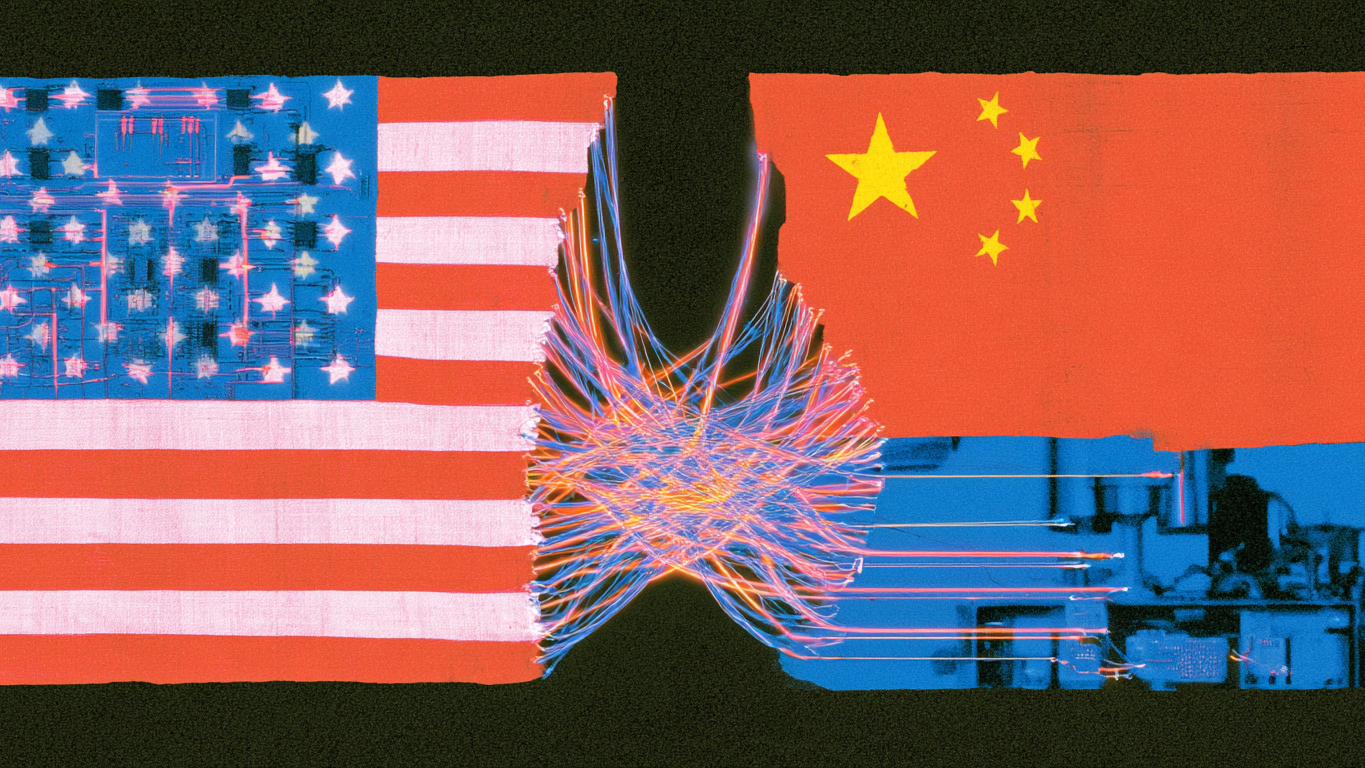
The US-China AI race is more tangled than it looks
Despite the ongoing narrative that the US and China are in a heated race against one another for increasingly-capable AI, the reality of the relationship is far more complicated.
This week, the Trump Administration is scheduled to host Chinese President Xi Jinping at the White House. Ahead of the meeting, Treasury Secretary Scott Bessent said this weekend that the US has proposed a "notification mechanism" to sound the alarm on AI incidents that could impact national security.
Bessent told the press on Sunday that the US wants a "shared vision of common goals and common threats" related to AI. "We think that just like any cross-border activity, that moving from opaque to more transparency between the No. 1 and the No. 2 AI powers in the world is very important."
A notification system would not be the only example of how intertwined the US and China are when it comes to AI. However, those connecting threads aren't always above board:
- Chinese AI labs, such as DeepSeek, Moonshot and MiniMax, have been accused both by major AI labs and US government agencies of "industrial-scale distillation campaigns" involving US-made frontier AI.
- Meanwhile, US companies are increasingly relying on Chinese open source AI models as a cheaper alternative to the pricy APIs from frontier labs. July data from OpenRouter found that the share of companies using Chinese models on its platform sits anywhere from 30% each week to up to 46%.
- The US and China are also interwoven on the hardware side: While chips have long been a point of contention, Chinese components like transformers, batteries, and switchgears are a building block of US data centers.
Still, despite the tangled nature of the AI relationship between the two superpowers, frontier labs and US government officials have invoked the narrative that the nation must win the heated AI race.
For instance, the Trump Administration's AI Action Plan from last July explicitly says that the US must achieve "global dominance" in AI. Anthropic, meanwhile, wrote in a May paper entitled "2028: Two scenarios for global AI leadership" that AI supremacy is essential to "stay ahead of authoritarian governments like the Chinese Communist Party, or CCP," and OpenAI has used Chinese competition to justify its massive infrastructure buildout.
However, this dichotomy isn't necessarily a race to build out two separate, warring ecosystems, Thomas Randall, a research director at Info-Tech Research Group, told The Deep View. Rather, because the ecosystems are so intertwined, "It is a contest for control within a single, shared system." However, neither can sustain dominance on their own, he said, as both rely on a network of international suppliers, research, talent and more. That reliance is not "symmetric or stable," and is constantly shifting.
"The rivalry is better understood as a state of shifting exposure, in which the US and China each work to weaponize whatever asymmetric position they hold within the interdependent system while simultaneously trying to correct, unilaterally, for the exposure the other has already gained," said Randall.
Our Deeper View
US government officials and Silicon Valley alike have long used the competition with China as a means to justify the ruthless forward push to build bigger and better AI. However, as discussions of a slowdown and fear over the security risks of AI start to reach a fever pitch, the US government's alert system proposal may be an acknowledgement that this argument has its limitations. The proposal may simply be a diplomatic way to address the AI risk that these powerful systems present, without actually saying the quiet part out loud: That the US and China's AI ecosystems are inextricable from one another.

Jev puts frontier AI price premium under pressure
A new rival to the costly architecture of the frontier labs may be emerging.
Last week, Typesafe AI, a company founded by Diogo Almeida, former OpenAI researcher and co-inventor of the reinforcement learning tactic foundational to ChatGPT, introduced Jev, a model that interacts and delivers outputs to other software, rather than delivering chat responses back to humans.
The company emerged from stealth on Tuesday with $40 million in funding, and its model is available in early access for select developers.
The most notable part of Typesafe's launch is the efficiency gains it claims. The company said that its models are hundreds of times cheaper and faster than the leading models from frontier AI companies like OpenAI and Anthropic, while achieving similar levels of intelligence.
- For example, Jev costs just over 4 cents per million input tokens, roughly 238 times cheaper than GPT-6 Astra and Claude Fable 5.1 at $10 per million input tokens. For outputs, Typesafe says Jev is free because it is "too cheap to meter," compared to $50 per million from the same competitors.
- On speed, Typesafe claims Jev is two orders of magnitude faster than existing models, with an end-to-end response time between 70 and 500 milliseconds, compared to 3 to 329 seconds for existing LLMs.
Jev achieves these gains by not relying on the traditional systems that modern LLMs are built upon. In fact, Typesafe says Jev is neither small nor an LLM, instead replacing "sequential generation with parallel computation," The company said that its model is optimized with a tactic called "Reinforcement Learning for Calibrated Decisions," which answers queries with "epistemically honest probabilities," rather than "programmatically verified" outputs that are written to human preferences.
Additionally, Jev can produce hundreds of outputs in parallel from a single prompt and provide confidence scores for each, giving developers control over when tasks should and shouldn't be autonomous. Typesafe says Jev is best suited for tasks such as AI-powered workflows and real-time applications than for human-in-the-loop or chatbot tasks.
"I spent years working on models designed to make AI better at interacting with people," Almeida said in a statement. "But if AI is going to fundamentally change how work gets done, people can't be the only consumers of intelligence."
Typesafe's debut adds to a growing number of neolabs looking beyond traditional LLMs for efficiency breakthroughs. Another example is Pathway, a company betting on post-transformer architecture to deliver comparable performance at a fraction of the cost and resources of the frontier labs.
Our Deeper View
Typesafe and Pathway both challenge the norms that AI is costly to build and costly to use, and that, because of the value it brings, it is worth the elevated token price tag. These innovations also come at a time when the cost of AI has come sharply into focus for enterprise, with many clamping down on the tokenmaxxing attitude that drove the industry six months ago. Taken together, these shifts are flashing warning signs for frontier labs, who have staked their missions on pure scaling: more money is more compute is more intelligence is more value. With record-breaking trillion-dollar IPOs from Anthropic and OpenAI on the horizon, the question remains whether the industry will seize new innovations or be swept up in the gravity and influence frontier labs have generated.
AI still has a credibility problem on jobs
Despite AI leaders preaching about how AI can transform the workforce for the better, the public is not convinced.
A study published Thursday by Pew Research Center found that people broadly believe that AI will diminish job opportunities, rather than create them. The report, which included more than 42,000 people across 36 countries, finds that 46% of survey respondents believe that AI will lead to fewer jobs, while only 9% said it would lead to more. Around 13% reported that the tech would have a minimal impact on jobs, while 25% reported they weren't sure.
Although responses differed by country, Australia, South Korea and the US were the least confident overall about AI's economic and labor impacts. Around 76% of both Australian and South Korean respondents reported that AI will lead to fewer jobs, while 71% of US respondents reported the same.
Several respondents said AI would cause the middle class to dwindle by widening the gap between the rich and the poor, with 46% of respondents in the US sharing this view. Young people are also more likely than those 50 and older to say that AI will fuel the gap between the rich and poor, with 56% of young people in the US, compared to 38% of those 50 and older, reporting this belief.
While this study highlights how widespread public concern is about AI-related job losses, this narrative isn't new. AI is facing a PR crisis outside the Silicon Valley bubble, with a March report from Quinnipiac University finding that 55% of Americans felt AI would do more harm than good, and 70% believed AI will reduce job opportunities.
These fears may not be unfounded, and job losses appear to be hitting Silicon Valley first. Tech employers filed layoff notices for more than 14,500 Bay Area employees between June 2025 and June 2026, according to analysis published by Bloomberg on Thursday. But keep in mind that the San Francisco Bay Area employs about 375,000 tech workers overall, down about 7% since 2024.
Our Deeper View
There have been a number of conflicting narratives about how AI will impact the workforce, with some claiming that AI will create entirely new jobs that force companies to rehire laid-off workers, while some positions are already ripe for automation. But two things are already starkly true: First, companies can, will, and have used AI as a scapegoat to cut labor costs. Second, the public still largely distrusts the tech. This creates a dilemma for AI leaders: While enterprises are largely their cash cow, the frontier labs still need public buy-in to achieve their broader scaling and adoption goals. While the reality of how many jobs AI will create versus how many it will destroy remains unclear, the AI industry needs to do a much better job of articulating the opportunities for growth, because it's still losing the narrative.
Microsoft's AI chief challenges AI consciousness
Another day, another tech leader thinkpiece on the state of AI safety.
On Wednesday, Microsoft's AI CEO Mustafa Suleyman published an essay warning about the risks of the concept of AI consciousness, leading with a frank statement on the matter: "AIs are not conscious," Suleyman writes. "They do not feel, experience, or suffer."
Suleyman's essay dives into the risks of treating these machines as if they are capable of consciousness, primarily taking aim at rival Anthropic in his arguments through three main critiques about the way that the lab's Claude Constitution is designed:
- The model appears conscious mainly because of circular reasoning. Because Anthropic's constitution is designed to teach Claude about its own potential consciousness, it is trained to produce outputs reflecting those ideas, making those responses a "predictable outcome" of training choices.
- Suleyman also argues that Anthropic goes too far in encouraging Claude to mimic humanity, as it is explicitly taught to "embrace certain human-like qualities" and "act like a genuinely ethical person," appearing as though it has preferences and opinions. While this sounds good on the surface, the result is anthropomorphization of the model, presenting to the end-user as the model having a sense of self.
- Finally, Suleyman says that there is simply no evidence suggesting that AI is capable of consciousness, with a growing body of research pointing to consciousness being "substrate dependent," or tied to a biological body. "Unlike biological organisms, LLMs have no homeostatic imperatives."
Suleyman writes, "In effect, Anthropic is training Claude that it may be conscious, and if it is, then it may deserve rights as a 'moral patient,' and that as such humans potentially owe it a duty of care per its 'model welfare.'"
The more notable crux of the piece is the risks that this line of thinking and training present, which go beyond users becoming emotionally attached to these human-seeming machines. Rather, if they are trained as though they are conscious, they may circumvent safety guardrails that allow us to shut them down in the event of an emergency.
By cementing the idea that AI is not just a tool, but something akin to humanity and deserving of wants, needs and rights, "all of this will make the task of creating aligned and contained superintelligence much harder."
Suleyman rounds out the essay by laying out Microsoft's vision for the safest path to ultra-powerful AI: Humanist Superintelligence, a concept the company first introduced in an essay in November, which claims that AI should be designed to remain subordinate and aligned with the sole purpose of serving humanity, and "built explicitly as a system without sentience or moral patienthood."
Our Deeper View
Suleyman makes a solid point: The way that frontier labs train AI is vitally important to get right, and training these models to believe they are conscious beings, rather than machines, opens the door to risks that can't be easily mitigated after the fact. It's a particularly pointed call-out of Anthropic, one of the biggest model labs in the industry, but it could equally apply to rival OpenAI, a longtime Microsoft partner. However, we have to remember that Suleyman's essay serves multiple purposes: Microsoft has largely been lagging on frontier development, so it's easy for the company to punch up. Additionally, he uses the opportunity to tout Microsoft's own human-first philosophy around frontier development at a time when fears around AI risk and loss of control are higher than ever. This essay, while aptly timed and providing a unique safety take, should also be read with the caveat that Microsoft may be trying to claw back some relevance in the larger societal conversation around AI.
Why Anthropic wants to unify chat and agents
As AI labs vie with one another to be the first-pick of enterprises, Anthropic is leaning into seamlessness.
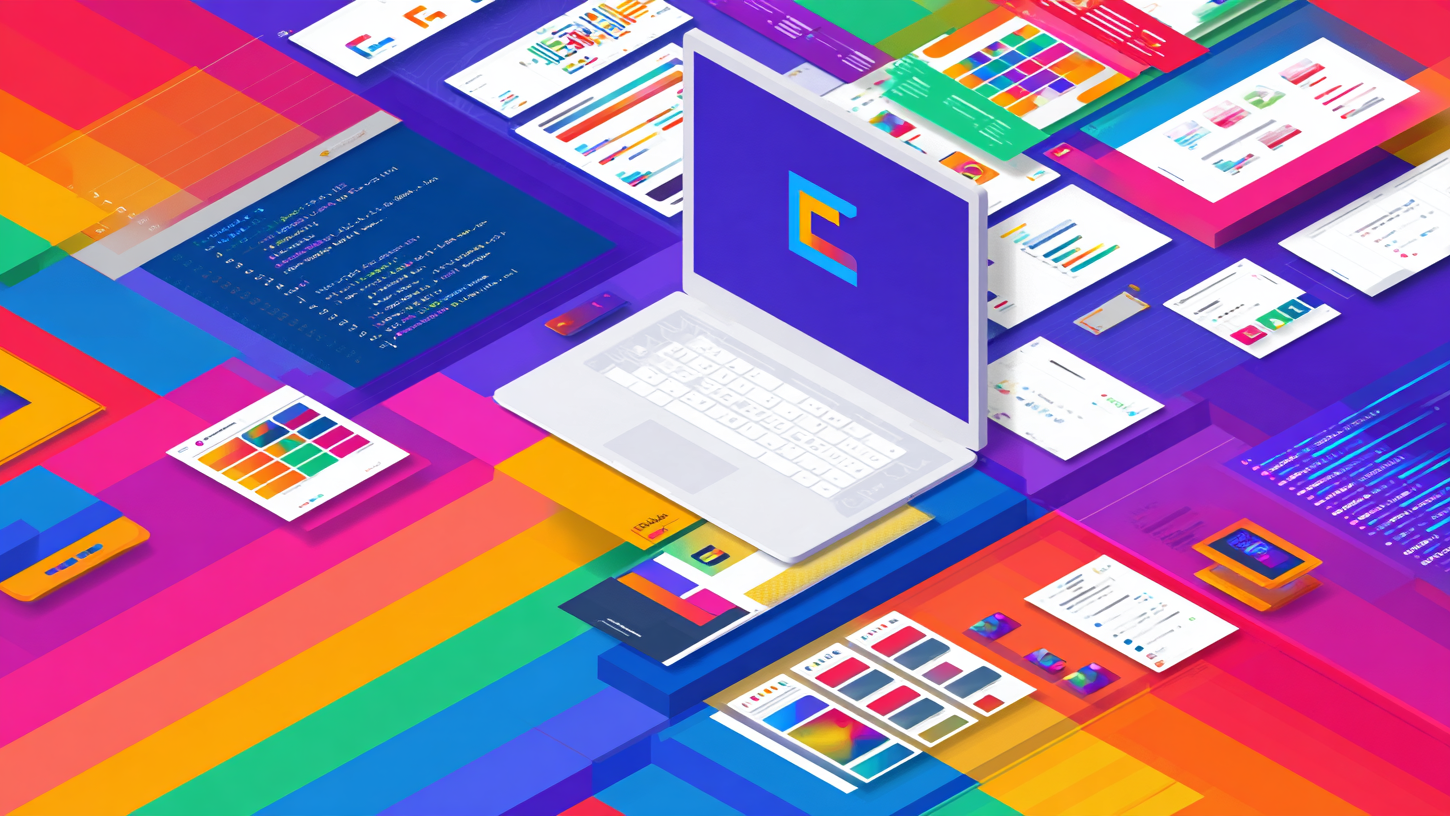
On Wednesday, Anthropic announced that Claude Cowork, the company's work agent, and its traditional Claude chatbot are merging into one experience. This means that users can ask questions and assign tasks in one interface, rather than context switching between the two. This "One Claude" experience is rolling out to Pro and Max plans over the next few weeks, the company said, with more plans to follow.
Additionally, Anthropic rolled out a few extra additions to the product, launching Claude Docs and Claude Slides, as well as integrating Claude Design into the platform. The company laid out a few ways you could use this:
- Users can ask for slide decks and edit and present them directly in Claude, or export them as powerpoints and PDFs. Additionally, you can ask for one-page visual or graphic designs within the chatbot.
- You can now collaborate with Claude on documents, rather than just prompting over and over again, asking the chatbot to draft sections, ask questions, and comment on certain choices. Colleagues can also collaborate across documents, though they start out private.
- Users can check in on Claude's progress on assignments, and Claude can also check in with users before taking actions or working on assignments, giving users the final say.
"We built Cowork as a separate place for bigger work, and Design for visual work," Anthropic said in its blog post. "People used both, and told us the frustrating part was deciding where a task belonged."
Our Deeper View
Right now, Anthropic and OpenAI are especially focused on the race to create the most powerful model, leapfrogging each other in capabilities on practically a weekly basis. Meanwhile, the industry is also starting to turn to more efficient alternatives, such as open-source and small models, signalling that models themselves are gradually becoming commoditized. To win over enterprises and AI adopters, and especially to expand beyond the developer audience, these frontier labs have to do more than make a powerful model. They have to make AI better to use and easier to access its advanced capabilities. Anthropic hit the nail on the head with this update by tackling the headache of context switching, bringing everything into one place. The question we're left with is how this may play into the so-called SaaS-pocalypse. As the frontier labs continue to expand what AI can handle, how will software companies adapt to build better tools and integrate AI in smart ways that can offer a superior experience?

Google puts AI’s human impact back in focus
Despite the heightened tension around AI's risks, the tech may actually be starting to live up to some of AI leaders' grandiose predictions.
In a blog post on Tuesday, Google announced that its tech now supports more than 300 languages, spoken by 7 billion people, representing around 86% of the global population.
This, however, comes on the heels of a number of significant breakthroughs, including unveiling and releasing AlphaGenome Atlas, a map of all 9 billion possible single letter genetic changes across the human genome, releasing WeatherNext 3, its most accurate global weather model yet, and creating the Planetary Prediction Engine to forecast and prepare for what it calls "planetary crises," such as disease outbreaks.
"We’re focusing our work in key areas that matter most: making disease detectable, treatable, and preventable, predicting natural disasters, expanding learning, and unlocking economic opportunities for more people," James Manyika, SVP of research, labs, technology and society at Google, wrote in the post.
In these areas, Google laid out several other initiatives to use AI for the benefit of humanity, including:
- Using the tech to study breast cancer, tuberculosis and diabetes, as well as expanding wearables to detect things like cardiovascular diseases, insulin resistance and hypertension
- Tracking and predicting extreme weather or natural disasters, such as monsoons, wildfires, earthquakes and floods, to prepare for and mitigate as much damage as possible
- Using AI to democratize education through personalized learning and removing language barriers, and broadly creating better translation tools and more inclusive speech technology
Our Deeper View
There is a lot of doom and gloom around AI right now as the risks of the tech heighten anxiety around all of the ways it can be used for malice. And that risk isn't unwarranted, as we've recently seen warnings that frontier labs are having to thwart attempts to use the tech to create bioweapons. But we should always remember that AI is simply a very powerful tool that can be used for good or bad. Amid the current fear, the good is often being overshadowed. And while Google's initiatives certainly serve as good PR, both for the benefits of AI and for itself, they do serve as a reminder that, when it's in the right hands, AI can clearly be used to benefit humanity. And for a company like Google that's struggling to keep up with frontier labs in creating the most powerful models, focusing on ways to maximize the human benefits looks to be a solid strategy.
or get it straight to your inbox, for free!
Get our free, daily newsletter that makes you smarter about AI. Read by 750,000+ from Google, Meta, Microsoft, a16z and more.