
Jason Hiner
Jason Hiner is the Editor-in-Chief and Chief Content Officer of The Deep View. He's an award-winning journalist who has spent his career analyzing how tech has reshaped society. He covered AI for over a decade at ZDNET and CNET as it evolved from research labs to enterprise infrastructure to a daily reality for over a billion people. He came to The Deep View to cover AI every day and build a next-generation media company.
Articles

How Claude Duet wants to finish your to-do list
Persistent agents are emerging as the next evolution of AI, but the company at the forefront of the AI revolution in 2026 has just gotten in the game.
Claude Duet, Anthropic's answer to Meta Muse, ChatGPT Dots, and GrokBot, arrived as a "research preview" last month, and I've gotten the opportunity to use it since then as well as ask the Anthropic team a few questions about it. I've also gotten the opportunity to compare Duet to Dots and Muse, both of which I've also been testing.
Persistent agents run in the background on a cloud computer, have their own web browser, connect to apps and services you give them access to, carry out multi-step workflows, monitor your files and messages for important updates, and proactively alert you when there are high-priority items that need your attention.
In my testing, I gave Claude Duet the same access to my Slack and Google Workspace accounts that I gave to OpenAI's Dots. As I wrote last week, Dots has proven to be more useful and proactive than Duet. But I've also given ChatGPT a little more context about my work over the last few years, so I'm conscious of the fact that that could be part of the difference. I give Muse far less access and context and so it's mostly helpful with shopping and very specific jobs.
Where Duet stands out is being extremely task-oriented. While Dots will simply surface information as a heads-up, such as conflicting meeting times or changing details on a project, almost everything Duet surfaces involves an offer to carry out a task—typically something it can do or fix for you—and then immediately gives you a button to click either Start or Edit.
"Claude Duet’s biggest differentiator is its judgment," an Anthropic spokesperson told The Deep View. "It is meant to be a resourceful agent that decides what needs you, what can wait, and when to check with you first."
In answering my questions about Duet, Anthropic also clarified a few things:
- Duet carries over your memory, skills, and connected apps from your Claude account
- Anthropic is fine-tuning Duet's judgment based on what early-access testers report
- Every message Claude Duet drafts and every file it uploads, go through a safety classifier to check for sensitive information
- The Anthropic team spends a lot of time calibrating how often Claude Duet asks for approval since approval fatigue is an issue that remains top of mind
- What’s urgent differs from person to person, so Anthropic found building an eval for it was imperfect but quite helpful, and that's another thing the team is evolving with feedback from early testers
For now, Claude Duet is only available to paid subscribers on Pro, Max, and Ultra plans who join the waitlist. On mobile, Claude Duet is a standalone app that is separate from Claude, but the web and desktop versions have Duet as one of the options in the left nav.
Our Deeper View
My experience with Claude Duet has been that it's a little less aggressive than Dots or Muse in proactively prompting me. But it's also more action-oriented, and ready to carry out tasks that anticipate my needs. For example, when someone sends me an email and says let's make our next steps A, B, and C, Duet jumps on that and offers to start drafting a document to get that rolling. Or, when highly time sensitive emails arrive, it not only alerts me but drafts a potential response that I can send or edit. Lots of us have been manually prompting AI to do these kinds of things for the past several years. AI becoming proactive and prompting you is the next stage. Dots and Duet are just the beginning, and they are general agents that can work across your entire life. For professionals and organizations, look for enterprise platforms from your systems of record to start offering similar persistent agents that deal with the data they manage in secure and compliant ways. And then the next step after that will be those agents talking to your personal agents.

Why AI devices are still struggling to find a purpose
AI is showing up in nearly every new gadget. But what would make a device worth buying specifically for its AI?
In this special episode of The Deep View Conversations, Jason Hiner and Sabrina Ortiz take stock of 2026's AI devices and debate what would make the next generation truly useful.
The discussions starts with Google's Rambler dictation feature and Wispr Flow: is easier access AI a breakthrough, or simply better product design? Real-world experiences with Siri AI also get some air time, along with an explanation of why an assistant's usefulness depends so much on the apps, habits and personal context it can access.
The conversation also includes foldable phones, Apple's HomeView, and a growing range of smart glasses. Hands-on experiences raise questions that go beyond hardware: Which AI do you trust with your information? Will people feel comfortable around cameras on your face? And does putting a chatbot into a new object solve a problem that your phone doesn't?
Other topics covered:
• Why AI features and a true AI device are different propositions
• Proactive agents and why they are emerging as the next differentiator
• The iPhone Duo and how foldables can make managing AI agents more practical
• Meta's audio glasses and Google's Gemini-powered intelligent eyewear
• Brilliant Labs Halo, memory and a different approach to privacy
• Snap Specs, face computers and potential uses in the workplace
• What OpenAI and Jony Ive would need to deliver with a new AI device
If you're following AI hardware, deciding which features matter or wondering whether a dedicated AI device can earn a place in your life, this conversation deciphers the product promises with the experience of actually using them.
📺 Watch on YouTube
🎧 Listen in your favorite podcast player
Subscribe to Deep View Conversations for interviews with the leaders shaping the future of AI, business, and technology: https://tdv.transistor.fm/
And don't forget to sign up for The Deep View daily newsletter. We don’t just cover AI, we decode it. In a world flooded with hype, we deliver sharp, no-nonsense insights to keep you ahead of the curve and help you put AI to work every day: subscribe.thedeepview.com
Why OpenAI's Dots leads the proactive agent race
Proactive agents that anticipate your needs are the best new trend in AI during the second half of 2026.
The year started with more AI moving from chatbots that simply answer your questions to agents that handle your tasks. That's where OpenClaw, Anthropic's Claude Code, OpenAI's Codex, and a slew of other agents stole the headlines and drove AI token bills through the roof.
The next stage is persistent agents that can watch your messages, follow your files, carry out multiple-step workflows across different platforms, and preemptively flag you when you're missing something, making mistakes, or are unaware of gaps that are emerging.
OpenAI's Dots, Anthropic's Claude Duet, Meta's Muse, and SpaceX's GrokBot are the best examples. All four are persistent agents that run with their own cloud computer and web browser, work within the apps you connect, run in the background without your intervention, and require your approval before taking consequential actions.
I've been testing the ones from OpenAI, Anthropic, and Meta for the past couple months and I'm especially impressed with OpenAI's Dots. It has saved me from a number of mistakes and errors, flagged impending calendar conflicts, reminded me of things I promised to do, proactively helped me prepare for important meetings, flagged upcoming deadlines, and generally anticipated my needs in ways that are helpful without being creepy.
Here are a few examples of things that Dots did for me:
- Noticed that a hotel booking confirmation was off by one day on either end of the trip compared to what I had requested in an email thread, which saved me a headache when I would have tried to check in and discovered I didn't have a room
- I remembered that I had promised two deliverables to teammates when I was going to be back at my desk on a Friday, but I couldn't remember what the two things were; Dots reminded me of exactly the two things I had promised and it was over 24 hours ahead of time so I still had time to work on them and meet the deadline
- Caught a discrepancy between facts written in an article in Google Docs and the press release about the topic from my inbox; it was right and it flagged it fast enough that we caught it before it was published
- Proactively flagged two typos in an important work document that I created before it was sent to the stakeholder who needed to review it
- Regularly reminded me of important emails and messages that needed a response, but had scrolled off of my radar
Of course, in order to get this level of usefulness I had to give OpenAI access to my Google Workspace and Slack. And since I work at a media startup, that's not such a big deal. But if you work in a regulated industry or handle deeply proprietary and confidential information, then that's not going to fly. However, more and more software companies are building their own versions of these kinds of agents into their regulatory-compliant versions of platforms for various industries.
As for Claude Duet and Meta Muse, I found that Duet is particularly good at identifying multi-step tasks it could carry out for me and simply offering a button to press to get started. But it's not nearly as prolific or proactive as Dots. And as for Muse, I didn't trust Meta enough to give it private data other than a connection to my Instagram. But it is a good shopping assistant. When I left one of my favorite shirts in a hotel room recently, Muse was able to go out to eBay and find an inexpensive version of the same shirt, for example.
Our Deeper View
This week I had a great conversation with an Uber driver about the ways he was using ChatGPT to streamline important parts of his work in his blue-collar service industry job until being laid off just a few weeks ago. And he mentioned that he's been continuing to use ChatGPT for job searches and automating other parts of his life such as personal budgeting. I asked him if he's been using Dots, and he said, "No." Then I explained some of the helpful things it can do (like the ones listed above) if he's comfortable hooking up his email to it. And then he said, "Oh yeah, it's doing all that for me," and he explained how it flagged new job listings he'd received in email that were a perfect fit for his skills and how he quickly applied to those. So he was using Dots without realizing he was using Dots, or remembering the brand name. I took this as a great sign that AI's latest benefits are starting to reach more users a lot faster. If you haven't tried Dots or other persistent agents like it yet, I'd recommend giving them a try. Just make sure you're clear and intentional about what your data privacy and compliance requirements are.
Anthropic shifts the AI race toward finished work
Anthropic wants to pivot the conversation around AI from raw costs to how much work the models and agents can actually complete for the money spent.
On Monday, Anthropic released its most advanced frontier models, Fable 5.2 and Mythos 5.2, claiming that they are built to coordinate agents to orchestrate much more complex workflows and see them through to the finish. Anthropic claims that Fable 5.2 and Mythos 5.2 generate tokens 30% faster than Fable 5.1 and Mythos 5.1. The frontier lab, which is in the process of going public, also cut the price of both models by 20%.
Fable can act as an Advisor, where less powerful (and less expensive) Anthropic models like Haiku, Sonnet, and Opus handle basic tasks but escalate harder problems to Fable. Conversely, Fable can operate in Orchestrator mode, delegating lower-level tasks to these smaller models.
Fable 5.2 and Mythos 5.2 are still the same model under the hood, but Fable is the public-facing version with "strong cybersecurity and biology safeguards to guard against misuse," as Anthropic characterizes it. Meanwhile, Mythos is only available to verified "organizations pursuing beneficial applications in cybersecurity or biomedical research," Anthropic says.
More to know about Fable 5.2 and Mythos 5.2:
- Both models are available for $8 per million input tokens and $40 per million output tokens; that's down from $10 input and $50 output and the same price as OpenAI's GPT-6 Astra (don't be surprised to see a price drop to match sometime soon). Google's Gemini 4 Carbon, one of the few models in the same league, costs significantly less at $4 per million input tokens and $20 per million output tokens (and it's 50% off that for an introductory period to entice more AI builders to switch).
- The two models are also launching with an optional fast mode that can generate tokens 2.5 times faster for twice the price ($16 per million input tokens and $80 per million output tokens).
- Fable 5.2 is available starting on Monday across AWS, Azure, and Google Cloud. Reputable firms can apply to get access to Mythos through the Cyber Verification Program or the Life Sciences Verification Program.
"You can just throw Claude Fable 5.2 at new, ambiguous systems it has never seen before, and it will figure out how to actually work within them," Matt Lee, senior staff engineer at Datadog, told Anthropic. "It's almost like an incident commander that can send out faster models to get quick signals and coordinate, which removes that burden from me as an operator."
Andrew Mager, staff engineer of agentic systems at Uber, reported, "I had Claude Fable 5.2 run a 10–12 hour security audit. It sent out about 170 reviewer agents and came back with a write-up, fix pull requests, and a policy proposal. It works until the job is actually complete instead of stopping at a plausible checkpoint."
Our Deeper View
With its leading-edge—but very expensive—models, Anthropic is trying to change the conversation around token economics to how much verified work a model can actually finish for the price of the tokens. The fact that Anthropic is building model routing into its platform is great for customers because it can potentially lower token costs and speed up tasks. It's also good for Anthropic because it means it won't get disintermediated by other routing platforms orchestrating between the best models, but instead allows the lab to offer tighter integration and coordination between its own models. At the end of the day, AI builders just want to get their work done and keep things fast and simple, while companies want to control AI and keep it within budget. At the same time, as professionals and companies accomplish more with AI, their appetite gets bigger for new work they can give it. That's where advanced models like Fable 5.2 and Mythos 5.2 are worth trying—more ambitious tasks that have failed in the past or newly ambitious ones that have emerged.
Meta’s Muse Ember wins on cost of agentic tasks
Meta has a new AI model that CFOs are going to love—and not because it automates spreadsheets.
On Monday, Meta launched Muse Ember, its budget-tier AI model to compete with Anthropic's Claude Haiku 5.5 and OpenAI's GPT-6. That's not to mention the latest budget-tier offerings from Google, Microsoft, and other frontier labs and neolabs. Muse Ember beats Haiku and Luna on lots of benchmarks and it looks like it will raise the bar on speed and performance per dollar.
The race for less expensive models that are capable enough to do most agentic tasks but can slow down ballooning AI bills has emerged as the hottest trend of the second half of 2026, as more and more organizations of all sizes find tasks to streamline with AI.
Simultaneously, it's no secret that AI costs have been scaling out of control for most of the year, with AI agents being one of the main culprits. As a result, CFOs and other leaders have made costly, inefficient use of AI models one of their biggest targets for reigning in spending. That's why there are new announcements almost every day about model routing and cheaper, more budget-friendly models.
Here's what Meta's Muse Ember brings to the table:
- Ember matches Haiku and Luna in base cost at $0.10 per million input tokens and $0.50 per million output tokens, but beats them in cached input per million tokens as they both come in at $0.01 and Ember costs $0.004 (60% less); as a result, Artificial Analysis estimates the approximate cost per task as $0.14 for Ember, $0.15 for Luna, and $0.41 for Haiku.
- In the AutomationBench-AA for business workflows, Ember scored 37.8% compared to 13.9% for Haiku 5.5 and 20.2% for GPT-6 Luna
- In the Coding Agent Index-AA benchmark, Ember scored a 46, while Haiku 5.5 scored 37 and GPT-6 Luna scored 31.
"What stood out in our testing was speed. Muse Ember ran up to 30% faster at the tail than the comparable model we tested, and it handled broad, multi-repo investigation tasks well. It’s a strong fit for fast, high-throughput agentic workloads," said Cloudflare CTO Dane Knecht, as quoted in a Meta statement.
Our Deeper View
Of course, models leapfrog each other day. Who knows how long it will be before other budget-tier models leapfrog Muse Ember, or which ones it will be. But this is another indication that Meta is catching up to the leading frontier labs to drive more competition, and that models in general are commoditizing. At the end of the day, the question for leaders and AI builders is how much useful work can a fixed AI budget buy? And the answer is more every day, if you use the right models and route your workloads effectively. Muse Ember is laser-focused on making the cost of long-running, routine tasks by agents a lot cheaper. And based on the early benchmarks, it's about as powerful as Anthropic's Haiku and even a little cheaper than OpenAI's Luna.
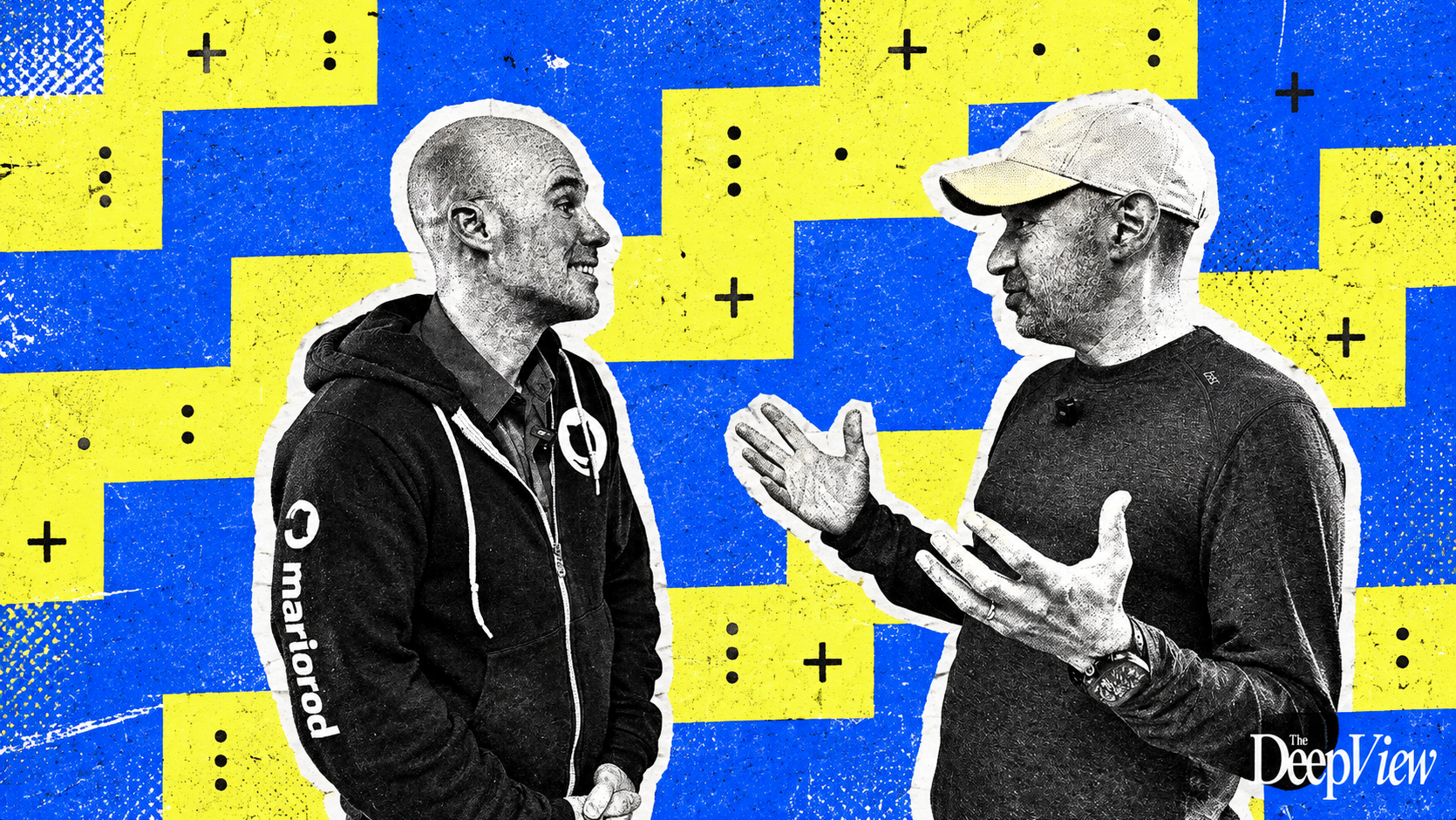
Code is cheap now. Trust is the new bottleneck
AI is making it easier for everyone to create software. The harder challenge is building the infrastructure, security and skills to turn that explosion of code into useful work.
In this episode of The Deep View Conversations, we sit down with Mario Rodriguez, GitHub's chief product officer, at GitHub Universe 2026 to explore how AI agents are changing the platform, the community, and the future of software creation.
Rodriguez explains why GitHub is rebuilding its foundations for machine-speed development, how its move to Azure supports that effort, and why writing code faster only helps if the software is secure and reliable. He also responds to Anthropic's decision to build Scion, its own version control system, and makes the case for Git's continued role as AI accelerates development.
The conversation goes beyond the technology to a bigger question: who gets to build? As people without technical backgrounds start creating software, Rodriguez argues that lowering the barriers can bring more people into the craft and some will naturally become professional developers. His framework: lower the floor, raise the ceiling, and widen the walls. This episode explains what he means.
Topics covered:
• GitHub's vision for collaboration between people and AI agents
• AI scanning, code review, and cybersecurity upgrades
• Copilot projects, agent squads and automations that learn from their results
• Keeping work moving across mobile, the web, Slack, and Teams
• Why AI demand accelerated GitHub's move to Azure
• GitHub's ambition to reach a billion developers
• Why easier entry into coding can strengthen open source
If you want to understand where professional software development, vibe coding, and open-source AI are heading, don't miss this one.
📺 Watch on YouTube
🎧 Listen in your favorite podcast player
Subscribe to Deep View Conversations for interviews with the leaders shaping the future of AI, business, and technology: https://tdv.transistor.fm/
Surge of coding agents reveal humans' changing role
Building software looks completely different than it did a year ago, and the implications are becoming clear.
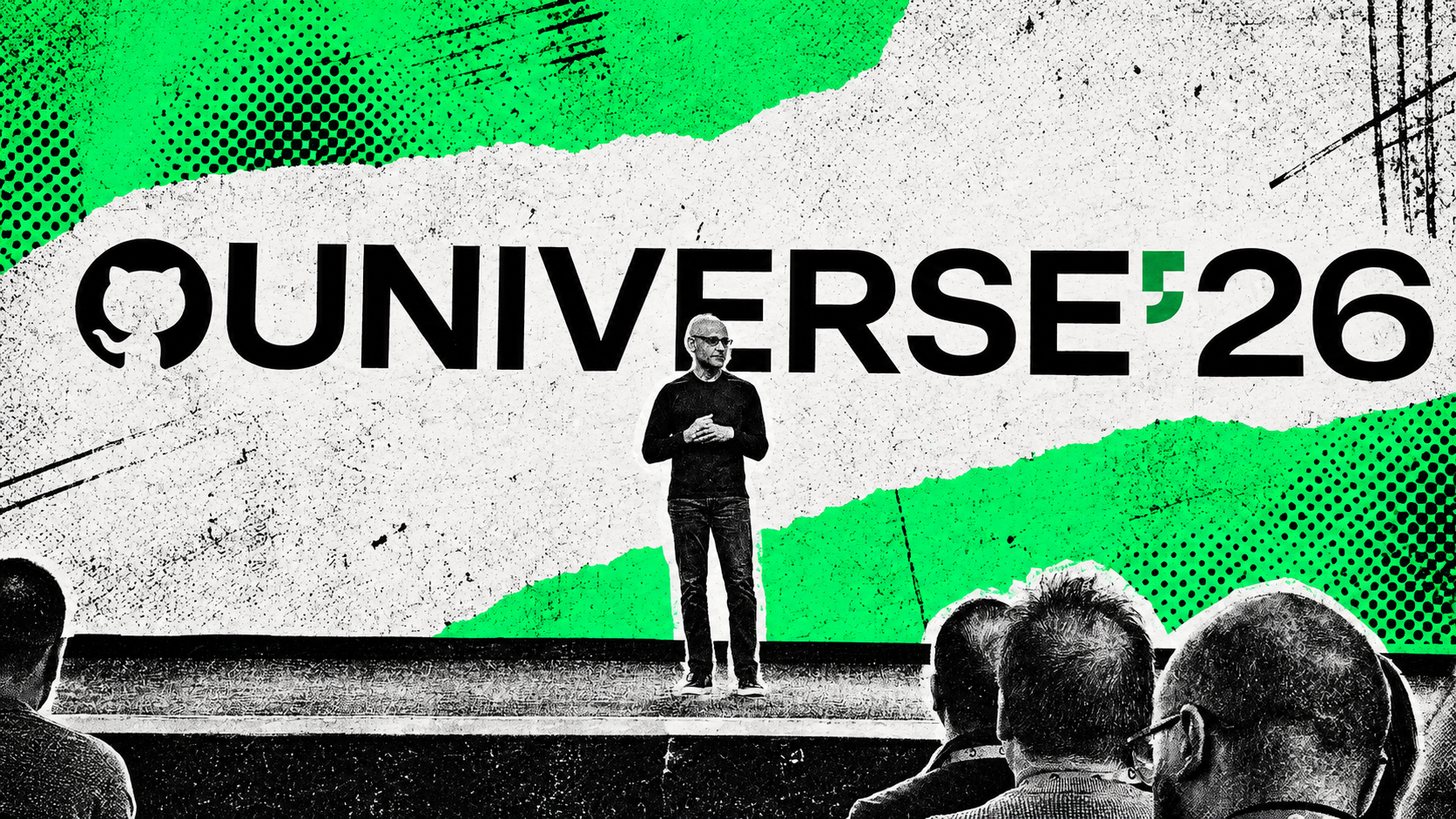
In GitHub's 15th annual Octoverse report unveiled last week at the GitHub Universe event, the Microsoft-owned developer platform revealed that 40% of all GitHub pull requests, a major part of the technical process for updating software, started with an agent in September, up from 17% just six months ago.
And the use of AI coding agents is dramatically increasing overall software development activity. GitHub recorded 17.9 billion code pushes during its annual reporting period ending in September 2026. That's more than it reported in its 2024 and 2025 reports combined. And the activity hit another gear in June of this year, as the chart below shows.
That momentum means the human role in software development is evolving toward deciding what to build, choosing the right models and tools to build with, and judging the results. That is going to change the skills developers need. It will put more weight on analysis, critical thinking, ideation, and evaluation. As AI accelerates the speed of development, it becomes more important than ever to be able to judge which work deserves to move forward.
Tala Karadsheh, GitHub's senior director of business insights, told The Deep View that the report showed we're moving to a world where agents will write the first draft of the code while professionals developers will develop a process to review the outputs and manage quality and risk.
Other interesting takeaways from the report include:
- Use of Copilot’s cloud agent grew 230% year over year, compared with 85% for agent chat, which is more evidence of developers shifting from using AI to answer questions to delegating entire tasks to it.
- Paid Copilot users drew on 47 distinct models in September, and none carried more than 25% of requests, which show no one model or lab is winning and model use is diversifying.
- Over 60% of paying Copilot users tried automatic model selection at least once in September, which shows the huge opportunity for model routing and making AI more efficient.
- Both AI-assisted code review and GitHub Advanced Security grew more than 90% year over year, indicating that demand is also growing for using AI to double-check and secure software.
- Public repositories serving construction work grew about 17x since 2022, while mining-related repositories grew about 65x (off a small base), which shows that use of AI is broadening across more specialized industries.
Our Deeper View
Software development has been on the front lines of the generative AI boom. It's been the biggest beneficiary of LLM capabilities and it's also been the profession most deeply impacted by the new technology. GitHub, as the place where over 200 million developers host and collaborate on code, has been at the epicenter of the revolution. One of my biggest surprises over the past year has been people outside of tech revealing that they now have GitHub accounts and have been vibe coding solutions to some of their thorniest problems. But the rise of coding agents and the ability of AI to let a lot more people code has not led to the downfall of the software developer. In fact, many are even more in demand because there's a lot more code in the world to manage. But as this year's GitHub Octoverse report made clear, AI is changing the human skills and capabilities that are most in-demand. And software engineering may just be the beginning, with similar phenomena to come for other professions soon.
AI coding needs smarter routing over bigger models
Coding agents can drastically accelerate how fast developers build, but defaulting to the most powerful models gets expensive fast. But what if your coding assistant could route to less expensive models when they don't need high-end frontier intelligence?
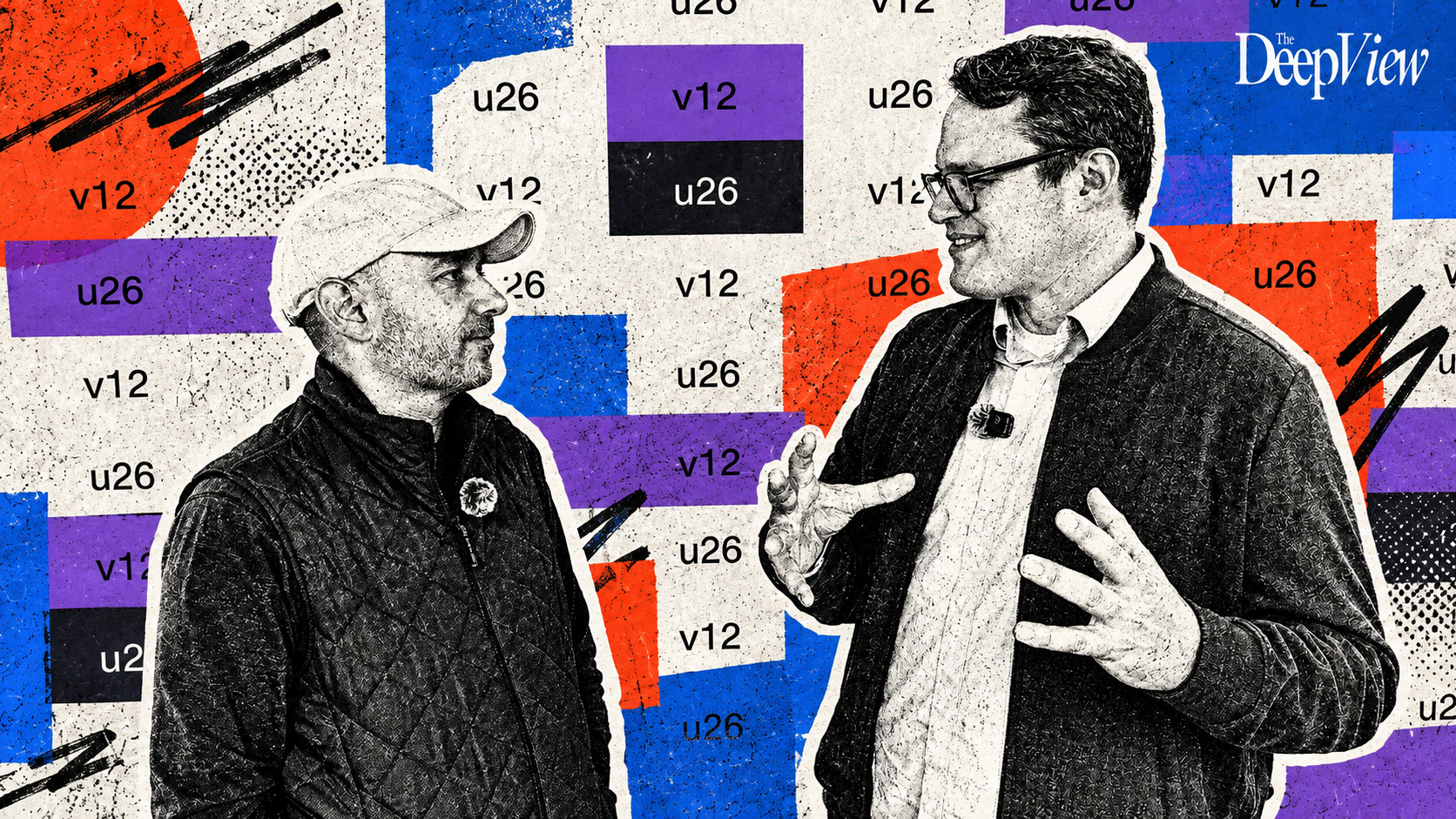
In this episode of The Deep View Conversations, we sit down with Kyle Daigle, GitHub’s chief operating officer, at GitHub Universe in San Francisco to explore how the company's new Copilot Fusion can route between models and reduce token costs.
Daigle explains how Fusion can start with a less expensive model, move to a more capable one when needed, and bring in a second model to check the first model’s work. He says GitHub’s teams and early enterprise customers are seeing 50% to 60% lower costs on complex work, with savings reaching 77% for certain workloads. But most importantly, it's getting results that match using high-end models while doing it about 40% faster.
Other topics covered:
• Why people outside traditional developer roles are building their own software
• How GitHub’s marketing and design teams use Copilot to create tools for their own work
• How Fusion’s Cascade and Critique approaches coordinate models within a task
• Choosing between Fusion Standard, High, and Max based on the work you need done
• GitHub’s plans to route some tasks to local models running on your computer
• How Copilot Projects brings repositories, files, and agents together in one workflow
If you’re building with AI coding agents, leading a development team, or managing your company’s AI budget, this conversation offers a way to control costs while keeping the capabilities
📺 Watch on YouTube
🎧 Listen in your favorite podcast player
Subscribe to Deep View Conversations for interviews with the leaders shaping the future of AI, business, and technology: https://tdv.transistor.fm/
GitHub unveils a fix for AI's token economics problem
In a single move, GitHub may have solved one of AI's most pressing issues and put itself back into the coding agent race.
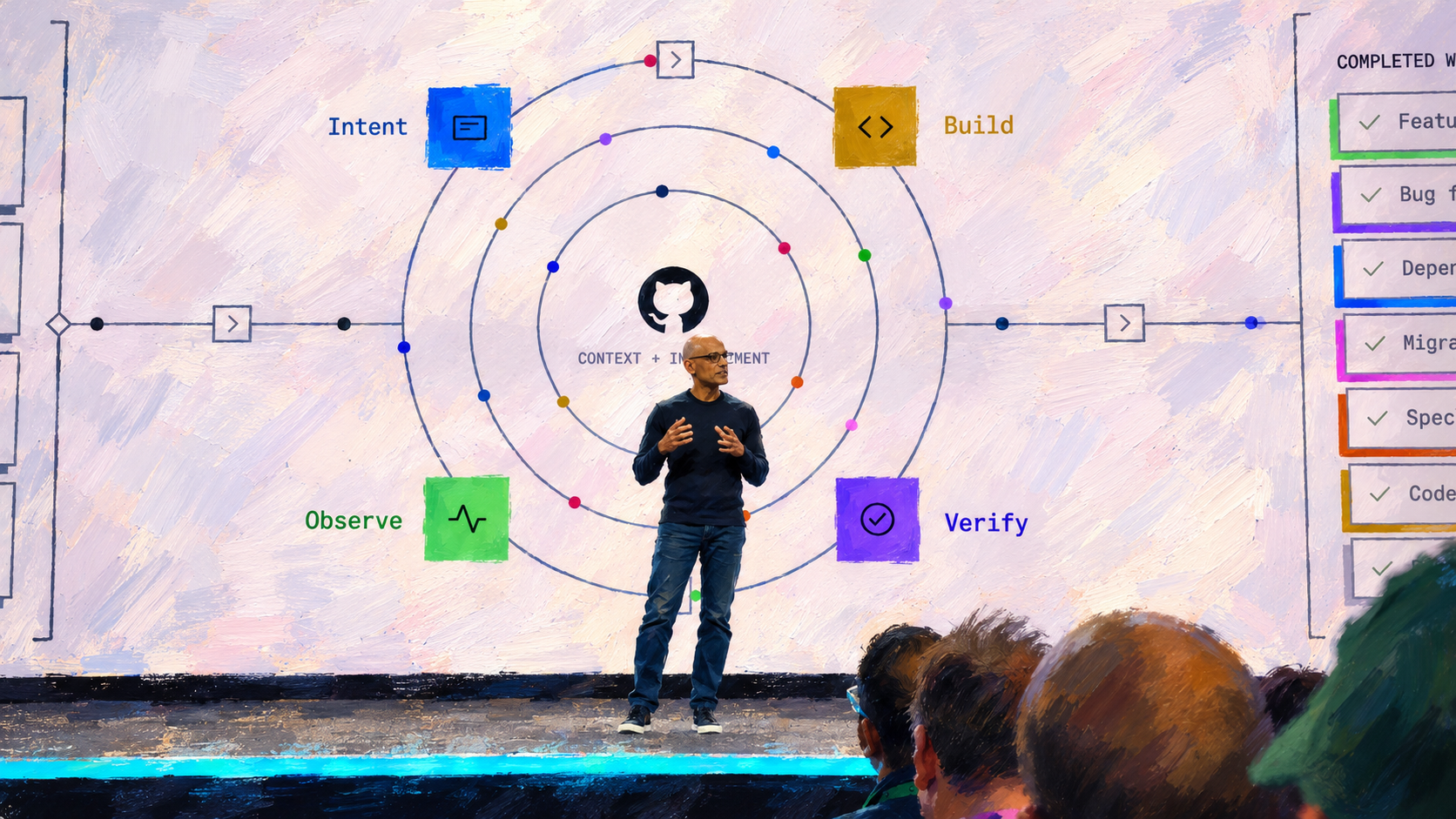
On Wednesday at its GitHub Universe event in San Francisco, the company unveiled GitHub Copilot Fusion, a multi-model orchestration feature that can save time and tokens while potentially achieving results that match using high-end frontier models alone.
That will be music to the ears of many CFOs and business executives who are sweating over ballooning AI costs. As we reported last week from Gartner Symposium, 81% of CIOs report that they are increasing AI spend while only 11% of CFOs report that they are seeing clear returns from AI.
Copilot Fusion potentially reduces costs by automatically routing tasks from AI builders to less expensive models. The way it works is that you can use the GitHub Copilot app as your coding harness and select Copilot Fusion as your model. Then you select Standard, High, or Max for the amount of effort you think your task needs and the software routes to different agents and subagents to complete the task.
There's a lot of nuance and complexity to the way it works, but the bottom line is that it starts with simpler models and escalates up as needed. The result, based on the Artificial Analysis Coding Agent Index, is Copilot Fusion Max is about as powerful as Claude Code with Opus 5.5 Max while using half as many tokens and using 40% less time to complete the average task.
GitHub COO Kyle Daigle told The Deep View that GitHub’s internal teams and early enterprise adopters are seeing roughly 50% to 60% lower costs on complex work with Copilot Fusion, and some are seeing up to 77% lower costs.
"We're really excited about it because it resolves the question of 'Do I really need this frontier intelligence?' And the answer is 'No, not all the time,'" Daigle said.
In addition to Copilot Fusion, GitHub also made several other key announcements at the event, including:
- Projects: Offers a persistent workspace across goals, context, sessions, and results to coordinate work and track progress.
- AI Scans: Helps find vulnerabilities in code, determines whether code calls vulnerable functions, and blocks known malware and critical vulnerabilities.
- App switching: You can now move between your phone and desktop apps to handle many of the functions of Copilot.
Our Deeper View
Coding agents have been a red-hot AI topic for 2026. But while GitHub Copilot is one of the incumbents in the coding agent space, it has largely been overshadowed by Claude Code, OpenAI's Codex, and SpaceXSI's Cursor throughout the year. With Copilot Fusion, the company is playing to its strengths and giving itself an excellent chance to get back in the game. Claude Code and Codex are never going to be likely to route to less expensive models, open models, or small language models because those companies are incented to maximize your model spend. GitHub Copilot, on the other hand, is incented to align with developer preferences. And Daigle told us that GitHub is also making it so that you can choose your own local models as an option in Copilot Fusion as well—increasing the speed and decreasing the costs even further. That gives GitHub an opportunity to help solve token economics, which is one of the most entrenched problems in AI right now.
or get it straight to your inbox, for free!
Get our free, daily newsletter that makes you smarter about AI. Read by 750,000+ from Google, Meta, Microsoft, a16z and more.